The traditional barrier between having an idea and seeing it live has finally collapsed. In 2026, we have entered the era of "Vibe Coding"—a paradigm shift where the heavy lifting of environment configuration, dependency management, and boilerplate generation is abstracted away into high-performance, browser-based agents.
From Scaffolding to Steerage
For decades, the first hour of any web project was spent in the terminal: npm install, configuring tsconfig.json, and wrestling with CSS-in-JS libraries. Today, that mechanical work is considered legacy. Modern developers are transitioning from "authors" to "editors," using tools like Bolt.new and v0 that treat code as an ephemeral byproduct of intent.
Going deeper on this theme: How to Remain Valuable When Intelligence Becomes Cheap — the scarce human, economic, and strategic advantages that stay valuable when AI does the cognitive work. A 224-page practical book, $3.84. Read it on Gumroad →
The "vibe" isn't just a buzzword; it represents a move toward high-context development. By describing a functional requirement in natural language, these browser-based engines leverage massive cross-repository indexing to scaffold production-grade Next.js or SvelteKit applications in seconds. We are no longer building from the ground up; we are steering pre-optimized architectures toward a specific vision.
The Browser as a Native Runtime
The technical catalyst for this shift is the maturation of WebContainers and WebAssembly (Wasm). In 2026, your browser isn't just rendering a UI; it's running a full Node.js environment or a Rust-based compiler directly in the client-side sandbox.
This leads to several critical advantages for the modern professional:
Zero-Latency Iteration: Tools like Replit and StackBlitz now offer near-instant Hot Module Replacement (HMR) because the build process is localized to the browser’s memory, bypassing the overhead of remote server round-trips.
Durable Execution: With the rise of protocols like Temporal 2.0, browser-based workflows can now manage long-running, complex state transitions that survive crashes and network partitions.
Safe Experimentation: Every browser tab becomes a clean, isolated staging environment. You can test a radical architectural change, discard the tab, and lose nothing—no local
node_modulesto clean up, no global configurations to revert.
The "Modular-First" Toolset
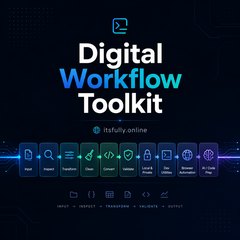
As industrial and commercial web standards lean toward the "Islands Architecture" (popularized by Astro) and zero-runtime frameworks like Qwik, the tools we use must be equally modular. The 2026 workflow favors "Atomic Utilities"—browser-based tools that handle one thing with extreme precision, such as:
AI-Driven Component Orchestration
The days of manual component libraries are fading. Modern authors use generative UI tools to "prompt-to-component," producing accessible, Tailwind-ready code that matches an existing design system’s tokens.
Edge-Native Debugging
With more logic moving to Edge Functions (Vercel, Cloudflare Workers), debugging has moved out of the local terminal and into browser-integrated observability suites. Real-time tracing and telemetry are now standard features of the browser-based dev experience, providing deeper insights into global performance than a local emulator ever could.
Precision Over Production
As 'itsfully.online' positions itself at the forefront of this digital transformation, the message is clear: the most valuable tool is the one that removes the most friction. Whether you are a senior systems architect or a solo founder, your competitive edge in 2026 is defined by how quickly you can move from a "vibe" to a validated, deployed reality.
The future of web development isn't just "in the cloud"—it's in the tab.